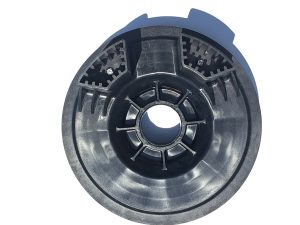
What the RPM sensor is (Comfort 220)
In the Marantec Comfort 220 system, the RPM sensor (V1 in diagrams) is:
A motor speed / rotation sensor that monitors how fast the motor shaft is turning.
From the official manual:
- Listed as “V1 RPM sensor” in the circuit diagram
- Works directly with the control board (microprocessor)
Core function
The RPM sensor provides real-time feedback to the controller.
What it measures:
- Motor rotation speed (RPM)
- Movement consistency
- Changes in load
What the controller does with it:
- Detects obstructions
- Controls soft start / stop
- Calculates force and position indirectly
Role in safety system (very important)
This sensor is critical to how Marantec systems work.
From the manual:
- Anti-block system works via:
- microprocessor + RPM sensor
- Protection against forced opening:
- Also via RPM sensor feedback
Translation:
Instead of using physical limit switches or pressure edges, the system:
- Watches motor speed
- Detects if the door suddenly slows or stops
- Interprets that as an obstacle or fault
How it actually works (practical explanation)
Normal operation
- Motor runs → RPM sensor sends pulses
- Controller expects a specific speed profile
- Door moves smoothly
If something goes wrong:
- Door hits obstacle
- Motor slows down suddenly
- RPM signal drops
Controller reacts instantly:
- Stops motor
- Reverses door (anti-crush safety)
Type of sensor (technical inference)
Marantec doesn’t explicitly state the sensor type, but based on system design it is typically:
One of these:
- Hall-effect sensor (most likely)
- OR optical encoder (less common in this model)
Output:
- Pulse signal (frequency = speed)
- Low-voltage signal (<24V DC system)
Electrical characteristics (system-level)
From the Comfort 220 specs:
- Control voltage: < 24V DC
- Sensor integrated into:
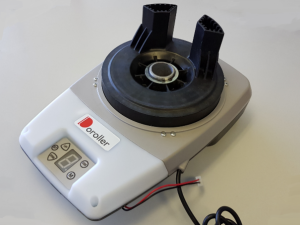
- Motor assembly
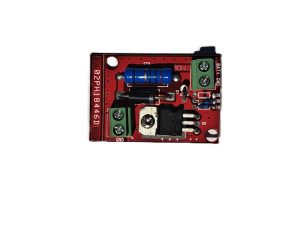
- Control board input (V1)
Signal type:
- Digital pulse train
- Interpreted by microcontroller
Fault detection & error codes
The RPM sensor is directly tied to diagnostics:
If it fails:
- System logs:
- Error: “Defective RPM sensor”
Symptoms in real life:
- Door starts then stops
- Jerky movement
- Reverses unexpectedly
- Won’t complete travel
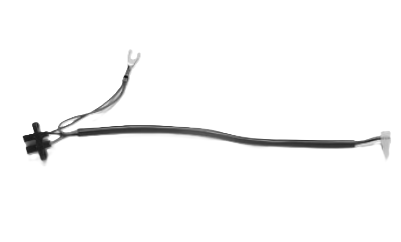
Physical description
Typical form (based on Marantec parts like the reference switch):
- Small sensor module
- Mounted near motor or gearbox
- Connected via cable to control board
- Often integrated (not easily separable)
Replacement / parts reality
There is a related official spare type:
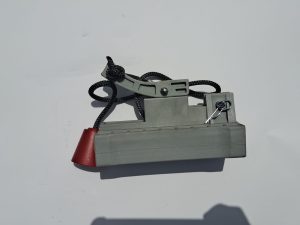
“Reference point switch” (separate component) exists as a spare part
But:
❗ The RPM sensor is usually not sold as a universal plug-in accessory
- Often bundled with:
- Motor assembly
- Internal wiring harness
Key specs summary (RPM sensor)
- Type: Speed/rotation sensor
- Function: Motor feedback
- Output: Pulse signal
- Voltage: Low voltage (<24V DC)
- Integration: Internal (V1 input)
- Critical for:
- Obstacle detection
- Anti-crush safety
- Smooth operation
Simple way to understand it
Think of it like this:
The RPM sensor is the “eyes” of the motor
- No sensor → motor runs blind
- With sensor → system “feels” resistance and reacts intelligently
Practical technician insight (important)
From real-world cases (and consistent with the manual):
- A faulty RPM sensor often gets misdiagnosed as:
- Bad motor
- Door friction issue
- Control board fault
But actually:
It’s one of the most common causes of erratic behaviour
Bottom line
The Marantec Comfort 220 RPM sensor is:
A critical internal speed feedback sensor
Used by the microprocessor to:
- Control movement
- Detect obstacles
- Protect users and the door system
Without it, the system cannot safely operate.
(The Company reserves the right to amend product specifications and information without notice.)