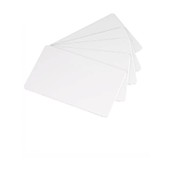
RFID (Radio Frequency Identification) cards are contactless credentials used to:
- Grant access to doors, gates, and turnstiles
- Identify users in security and attendance systems
- Interface with access control readers
In simple terms:
An RFID card acts like a wireless key—you present it to a reader, and it either grants or denies access.
How RFID Cards Work
- Each card contains a microchip + antenna
- When placed near a reader:
- The reader emits a radio signal
- The card responds with its unique ID (UID) or stored data
- The control system decides whether to allow access
Typical read range:
- ~2–10 cm for most systems
Main RFID Card Types (VERY IMPORTANT)
125 kHz (Low Frequency – LF)
- Most common in basic access systems
- Examples: EM4100, TK4100
Pros:
Cons:
13.56 MHz (High Frequency – HF / MIFARE)
- Used in modern secure systems
Pros:
- Encrypted memory
- Can store user data
Cons:
Dual Frequency Cards
Used when upgrading systems or supporting mixed readers
Functional Role in Door Systems
RFID cards work together with:
- Readers (wall-mounted devices)
- Controllers (e.g., Marantec / access boards)
- Locks or motors
Typical process:
- Card is presented
- Reader detects frequency and ID
- Controller verifies access
- Door opens
| Attribute |
|
|
|
|
| Frequency |
125 kHz |
13.56 MHz |
Dual (125kHz + 13.56MHz) |
13.56 MHz |
| Security Level |
Low |
Medium–High |
Medium–High |
Medium–High |
| Memory |
UID only |
1KB storage |
Depends on chip |
1KB per card |
| Typical Use |
Basic access control |
Secure systems |
Mixed systems |
Bulk installations |
| Cost |
Very low |
Medium |
Medium |
Medium (bulk) |
Technical Specifications (Typical RFID Card)
| Parameter |
Specification |
| Frequency |
125 kHz or 13.56 MHz |
| Read range |
2–10 cm |
| Material |
PVC (credit-card style) |
| Size |
ISO standard (86 × 54 mm) |
| Chip types |
EM4100, MIFARE Classic, DESFire |
| Lifespan |
100,000+ reads |
RFID cards are passive devices (no battery required).
Integration with Door Systems
RFID cards are used with:
- Access control panels
- Door controllers (e.g., Marantec systems)
- Readers using:
- Wiegand protocol
- RS485 communication
Important Practical Notes
Compatibility is critical
- A 125 kHz card WILL NOT work on a MIFARE reader and vice versa
- You must match:
- Card frequency
- Reader type
Security considerations
- 125 kHz → easy to clone
- MIFARE / DESFire → secure, encrypted
Typical South African use
- 125 kHz → older gate/door systems
- MIFARE → newer commercial systems
(The Company reserves the right to amend product specifications and information without notice.)